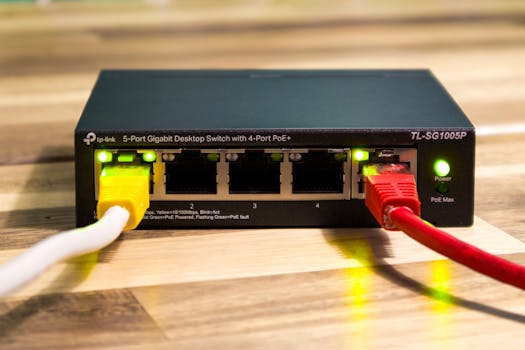
The Most Accurate Real World Comparison Between High End WiFi 7 Speed vs Cat8 Ethernet Cables for Professional 4K Streaming Setups
Alright, let's cut to the chase. If you're running a professional 4K streaming setup, whether it's for gaming, content creation, or high-stakes business presentations, you know that every millisecond and every dropped frame counts. The debate between wireless and wired connections isn't new, but with the advent of blazing-fast WiFi 7, the lines are getting blurrier than ever. Many are left wondering if it's finally time to ditch those cumbersome cables.
We're going to dive deep, looking at the practical, real-world performance of top-tier WiFi 7 against the undisputed heavyweight champion of wired connections, Cat8 Ethernet. This isn't about theoretical maximums you'll never see; it's about what you can actually expect when the pressure is on. Let's get down to brass tacks.
Understanding the Contenders: A Quick Primer
Before we pit these two giants against each other, it's worth a quick refresher on what each brings to the table. Knowing their fundamental principles helps us understand their strengths and weaknesses in a streaming environment.
WiFi 7 (802.11be): The New Kid on the Block
WiFi 7, officially known as 802.11be or Extremely High Throughput (EHT), is the latest iteration in wireless technology. It's designed to handle the most demanding network traffic, promising incredible speeds and reduced latency. This isn't just a slight bump; it's a significant leap forward.
Here’s what makes WiFi 7 a serious contender:
- Multi-Link Operation (MLO): This is a game-changer. MLO allows devices to send and receive data simultaneously across different frequency bands (2.4 GHz, 5 GHz, and 6 GHz). Think of it like adding extra lanes to a superhighway, dramatically increasing bandwidth and efficiency.
- Wider Channels: WiFi 7 can utilize channels up to 320 MHz wide, effectively doubling the bandwidth compared to WiFi 6E’s 160 MHz. More bandwidth means more data can flow at once.
- 4096-QAM (Quadrature Amplitude Modulation): This advanced encoding scheme packs even more data into each signal transmission. It’s like being able to fit more items into a single shipping container.
- Lower Latency: Through various optimizations, WiFi 7 aims to significantly reduce network delays, which is crucial for real-time applications like live streaming and competitive gaming.
Cat8 Ethernet: The Unsung Workhorse
Category 8 Ethernet cables, or Cat8 for short, represent the pinnacle of copper cabling for local networks. They are built for extreme performance, designed to support data rates far beyond what most home or even small business users typically require. When you think "bulletproof network connection," Cat8 comes to mind.
Here's why Cat8 has been the gold standard for high-performance setups:
- Incredible Bandwidth: Cat8 cables are rated for up to 2000 MHz (2 GHz), supporting data speeds of 25 Gigabits per second (Gbps) and even 40 Gbps over shorter distances. That's serious horsepower.
- Superior Shielding: Unlike previous categories, Cat8 cables typically feature heavy shielding on individual wire pairs and the overall cable. This robust shielding is a fortress against electromagnetic interference (EMI) and crosstalk, ensuring a clean, consistent signal.
- Backward Compatibility: While designed for cutting-edge speeds, Cat8 cables are fully backward compatible with older Ethernet standards, making them a future-proof investment.
- Eliminates Wireless Interference: A wired connection, by its very nature, isn't susceptible to radio frequency interference from other devices, microwaves, or neighboring Wi-Fi networks. It's a closed, dedicated pathway.
The Real-World Showdown: Where the Rubber Meets the Road
Now, let's get into the nitty-gritty. What do these technical specifications mean when you're actually pushing pixels for a professional 4K stream? It's about more than just a big number on the box.
Latency: The Unforgiving Metric for Live Streaming
For live 4K streaming, especially interactive sessions or gaming, latency is arguably the single most critical factor. High latency means delays, stuttering, and a generally poor viewer experience. It's the difference between a smooth, real-time interaction and a frustrating lagfest.
*
Cat8 Ethernet: This is where Cat8 truly shines. A wired connection offers an incredibly low and *consistent* latency. We're talking single-digit milliseconds, often less than 1ms between your streaming PC and your router/switch. There are no airwaves to contend with, no retransmissions due to interference. It’s a direct shot.
*
WiFi 7: While WiFi 7 boasts significant improvements in latency over its predecessors, it still operates over radio waves. Even with MLO and other optimizations, wireless connections inherently introduce more variables. You might see latency in the 5-15ms range in ideal conditions. However, any local interference – a microwave running, a neighbor's strong Wi-Fi, or even a Bluetooth device – can cause spikes and inconsistencies. For a professional setup where every frame is precious, this unpredictability can be a deal-breaker.
Throughput: Raw Speed, Raw Power
Throughput refers to the sheer volume of data that can be transferred in a given time. For 4K streaming, you need ample bandwidth to push high-bitrate video without compression artifacts or buffering.
*
Cat8 Ethernet: Cat8 guarantees a theoretical 25-40 Gbps over relatively short runs (up to 30 meters). In a real-world, well-configured setup, you'll consistently get speeds that max out your internet connection or local network capabilities. For example, if you have a 1 Gbps fiber connection, your Cat8 cable will deliver that full gigabit, reliably, 24/7. Even if your streaming setup is pushing a very high bitrate locally, Cat8 handles it with ease.
*
WiFi 7: The theoretical maximums for WiFi 7 are mind-boggling, often cited in the tens of gigabits per second. However, achieving those speeds in a real-world scenario is a different ball game. Factors like distance from the access point, wall materials, interference from other devices, and the number of devices on the network will significantly impact your actual throughput. While you might see bursts of multi-gigabit speeds close to the router with minimal interference, sustained, consistent high throughput for a professional stream can be elusive. Expect more in the range of 2-5 Gbps consistently, which is still excellent, but might fluctuate.
Reliability and Stability: The Streamer's Peace of Mind
A professional streamer needs a connection that's as steady as a rock. Dropouts, brief disconnections, or sudden slowdowns are simply not an option.
*
Cat8 Ethernet: This is where wired connections truly dominate. Once connected, a Cat8 cable provides a dedicated, immune-to-interference path for your data. It's a "set it and forget it" solution that offers unparalleled stability. Power fluctuations, RF noise, or even physical obstructions rarely affect a properly installed Ethernet cable. This means your viewers get a consistent, uninterrupted stream.
*
WiFi 7: Despite its advanced technology, WiFi 7 is still a wireless medium. This means it's inherently susceptible to electromagnetic interference, signal degradation over distance, and congestion from other devices sharing the same airwaves. While features like MLO help mitigate some of these issues, a perfectly stable wireless connection across long streaming sessions is still a tougher ask than with a wired one. You're always at the mercy of your environment to some extent.
Practical Considerations: Beyond Pure Performance
Performance numbers are one thing, but how do these technologies impact your day-to-day operations and setup?
Installation and Flexibility
*
WiFi 7: The biggest draw of WiFi is its convenience. No messy cables snaking across the floor. You can set up your streaming station virtually anywhere within range of your access point. This flexibility is a huge plus for dynamic setups or temporary locations. However, optimizing your WiFi signal often means careful placement of your router and antenna adjustments.
*
Cat8 Ethernet: Wired connections require physical cabling. This means running cables, which can be a chore, especially in existing structures. While it provides a pristine connection, it locks your streaming setup into a fixed location. Planning for cable runs, perhaps through walls or under floors, is essential for a tidy and professional look. It's an initial investment in time and effort.
Cost Implications
*
WiFi 7: Upgrading to a full WiFi 7 setup involves a significant upfront cost. You'll need a high-end WiFi 7 router or access point, and your streaming device (PC, console, etc.) will also need a compatible WiFi 7 adapter. These components are brand new and command premium prices.
*
Cat8 Ethernet: Cat8 cables themselves are generally more expensive per foot than older Ethernet categories, but they are still quite affordable. The main cost might come from hiring someone to professionally install runs or purchasing an Ethernet switch if you need more ports. Compared to a full WiFi 7 overhaul, a Cat8 wired setup can often be more budget-friendly for the *cable itself*, though installation costs can vary.
Future-Proofing Your Setup
Both technologies are designed with the future in mind, but they approach it from different angles.
*
Cat8 Ethernet: With its immense bandwidth capabilities (25/40 Gbps), Cat8 is remarkably future-proof for the foreseeable future of consumer internet and even most professional 4K streaming needs. Unless we're talking about uncompressed 8K multi-stream setups, Cat8 will handle virtually anything thrown at it for years to come.
*
WiFi 7: WiFi 7 is undoubtedly the future of wireless, pushing the boundaries of what's possible without wires. It provides a solid foundation for future bandwidth-hungry applications. However, wireless standards evolve rapidly, and what's cutting-edge today might be commonplace tomorrow. The constant battle against interference will also remain a factor.
The Verdict: Who Wins the Crown?
So, after all this, who takes home the trophy? The honest truth is, it's not a simple one-size-fits-all answer. For a professional 4K streaming setup, where reliability, ultra-low latency, and consistent high throughput are non-negotiable, the scales still heavily tip towards
Cat8 Ethernet.
Think of it this way:
* If your livelihood depends on a flawless, uninterrupted stream with absolutely minimal latency,
Cat8 is your safest bet. It's the equivalent of a dedicated, private highway for your data. You get peace of mind knowing that external factors are unlikely to derail your broadcast.
* WiFi 7 is phenomenal for its convenience and impressive raw speed for general use. For high-end gaming or casual 4K streaming where minor fluctuations aren't catastrophic, it's a stellar choice. But for professional applications, the inherent unpredictability of a wireless medium, no matter how advanced, introduces a level of risk that many professionals simply can't afford.
In a perfect world, having both is the ideal scenario. Use WiFi 7 for your mobile devices, guests, and less critical tasks. But for your primary 4K streaming rig, connecting directly to your network via a high-quality Cat8 Ethernet cable remains the gold standard for unparalleled performance and unwavering reliability. Don't compromise where it matters most.