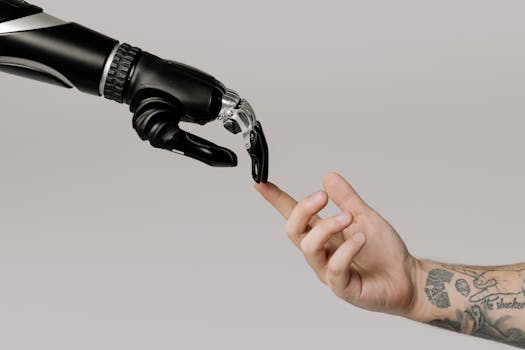
The Future of Stock Photography: How Shutterstock is Integrating DALL-E 3 Technology
Change, they say, is the only constant. And nowhere does that ring truer today than in the dynamic world of creative content. For decades, stock photography has been the lifeblood for marketers, designers, and publishers seeking high-quality visuals on demand. It’s seen incredible transformations, from physical archives to digital databases, and now, we’re on the cusp of arguably its most revolutionary shift yet: the age of generative AI. Shutterstock, a household name in this space, is not just observing this wave; they’re riding it, full steam ahead, by integrating OpenAI’s DALL-E 3 technology.
This isn’t just about making things a little faster or cheaper. We’re talking about a fundamental rethinking of how visual content is conceived, created, and consumed. It’s a paradigm shift, one that promises to redefine creativity itself, offering both exhilarating possibilities and some genuinely complex questions.
The "Aha!" Moment: Why AI is the Next Big Leap
Think about the traditional stock photography workflow. A creative brief lands, a designer sifts through thousands of images, perhaps tweaking one or two. It’s a process that, while effective, can sometimes feel like searching for a needle in a haystack, especially when highly specific or conceptual visuals are needed. This is where generative AI truly shines.
Imagine needing an image of a "robot meditating in a neon-lit cyberpunk forest." Good luck finding that perfectly pre-shot. But with a powerful AI model like DALL-E 3, coupled with Shutterstock’s vast library of existing content, such a prompt can manifest into a unique visual in mere seconds. This isn't just convenience; it's unlocking an entirely new level of creative freedom and specificity that was previously unimaginable for many.
It’s about going beyond what exists to conjure what *could* exist. This capability is a game-changer, plain and simple, pushing the boundaries of what stock photography can offer.
The Nuts and Bolts: How DALL-E 3 Works with Shutterstock
Shutterstock’s integration of DALL-E 3 is a testament to their forward-thinking approach. They were one of the first major stock content platforms to partner with OpenAI, providing their extensive image library to train these cutting-edge models responsibly. This wasn't a small undertaking; it involved meticulous curation and a deep understanding of ethical implications.
Now, users can access an intuitive text-to-image generator directly within the Shutterstock platform. The process is remarkably straightforward:
- Input Your Prompt: Users simply type in a descriptive phrase, detailing the image they envision. The more specific, the better.
- AI Generates: DALL-E 3, powered by its sophisticated understanding of concepts and aesthetics, then interprets the prompt and generates a selection of unique images.
- Refine and Download: Users can refine their prompts, iterate on the generated results, and once satisfied, download a high-resolution version, ready for their projects.
This seamless integration means that the power of advanced AI image generation is no longer confined to technical experts or prompt engineers. It’s democratized, putting a powerful creative tool right into the hands of everyday users on a platform they already trust.
Game Changers for Creators and Businesses
The implications of this technology for various stakeholders are nothing short of profound. For content creators, designers, and marketing teams, it’s like having a lightning-fast, infinitely patient visual assistant at their beck and call.
Unlocking Unprecedented Efficiency
No more endless scrolling or settling for "close enough." If you need a specific visual for a campaign, you can generate it instantly. This dramatically slashes production times, allowing teams to iterate faster and bring ideas to life with unprecedented speed. Time, after all, is money, and this saves a whole lot of it.
Customization at Your Fingertips
The ability to create highly specific and unique imagery ensures that brands can maintain a distinct visual identity without relying on overused stock photos. This elevates campaigns, making them more memorable and impactful. It’s about tailoring content with surgical precision.
Expanding Creative Horizons
For artists and designers, DALL-E 3 isn't just a replacement; it's a new medium. It can be used for brainstorming, generating mood boards, or even creating foundational elements that are then further refined by human artistry. It acts as a powerful springboard for novel ideas.
Cost-Effective Solutions
While premium AI-generated content will likely command appropriate pricing, the ability to generate unique visuals without commissioning bespoke photoshoots or complex illustrations can lead to significant cost savings, especially for smaller businesses or those with tight budgets. It levels the playing field in many respects.
Navigating the New Frontier: Ethical Considerations and Compensation
Now, let's address the elephant in the room. Any discussion about generative AI inevitably brings up concerns about intellectual property, artist compensation, and the ethical implications of using AI-generated content. Shutterstock, to their credit, has been proactive in addressing these complex issues.
Fair Compensation for Contributors
A critical aspect of Shutterstock’s approach has been the establishment of a Contributor Fund. This fund is designed to compensate artists whose work was used to train the generative AI models. It’s a crucial step in ensuring that human creativity, which underpins the AI’s ability, is acknowledged and rewarded. This is a big deal, setting a precedent for responsible AI development.
Intellectual Property and Licensing
Shutterstock is working diligently to establish clear guidelines around the licensing of AI-generated content. The goal is to ensure that users understand what they’re licensing and that the content they use is ethically sourced and legally sound. This includes questions about who owns the copyright to AI-generated images, a thorny issue that the industry is still wrestling with.
Ensuring Responsible Use
The platform also implements robust moderation tools to prevent the generation of harmful, discriminatory, or inappropriate content. This commitment to ethical AI usage is paramount for maintaining trust and ensuring the technology serves as a positive force. It's about setting guardrails in a rapidly evolving landscape.
The Road Ahead: What This Means for the Industry
The integration of DALL-E 3 into Shutterstock is more than just a new feature; it’s a bellwether for the entire creative industry. We are witnessing the beginning of a new era where AI becomes an indispensable partner in the creative process.
Traditional stock photographers might feel a tremor of apprehension, and that’s understandable. However, history teaches us that new technologies rarely eliminate entire professions but rather evolve them. Photographers and illustrators now have the opportunity to leverage AI as a tool, perhaps creating unique prompts, refining AI-generated imagery, or focusing on high-end, conceptual shoots that AI can’t replicate.
Shutterstock’s move signals a commitment not just to innovation, but to shaping a future where AI and human creativity can coexist and even flourish together. It’s about building a bridge between the vast, curated world of human-made content and the boundless, emergent realm of AI-generated visuals.
This is just the tip of the iceberg, folks. The future of stock photography, powered by sophisticated AI like DALL-E 3, is poised to be more dynamic, more personalized, and more creatively liberating than anything we’ve seen before. It’s going to be one wild ride, and Shutterstock is helping us buckle up for it.