From 10 Mbps to 500 Mbps. How One Simple Router Setting Changed My Internet Speed Overnight Without Paying for a New Plan.
For what felt like an eternity, I was stuck in the digital slow lane. My internet speed, despite promises from my provider, rarely crawled past a paltry 10 Mbps. It was a maddening existence, full of buffering wheels, endless downloads, and the constant frustration of a connection that simply wouldn't keep up. Streaming 4K was a pipe dream, online gaming a pixelated nightmare, and even simple web browsing felt like navigating treacle.
Every call to my ISP was met with the same song and dance: "Everything looks fine on our end." I'd reset the modem, swapped Ethernet cables, and even upgraded my router multiple times, always hoping for a miracle. Each attempt left me poorer, more exasperated, and no closer to the blazing speeds I knew I was paying for. I was utterly convinced the problem lay squarely with my service provider, or perhaps my aging hardware was just a dud. Go figure, I was wrong on both counts.
My Internet Woes: A Familiar Story
Picture this: You’re paying for a premium internet package, say 500 Mbps, dreaming of seamless streaming, lightning-fast downloads, and smooth online adventures. Instead, you’re getting speeds that feel like dial-up’s slightly faster, but equally annoying, cousin. That was my reality, day in and day out. It wasn't just an inconvenience; it was a constant source of low-level anxiety in an increasingly digital world.
I spent countless hours troubleshooting. I ran speed tests from every device imaginable, compared results, and even moved my router to different spots around the house, hoping a change in scenery might magically boost its performance. Nothing. The numbers stubbornly hovered around 10-15 Mbps, an infuriatingly consistent bottleneck that defied logic and, more importantly, my wallet. It felt like I was literally throwing money down the drain.
The Hunt for Answers: Where Did I Go Wrong?
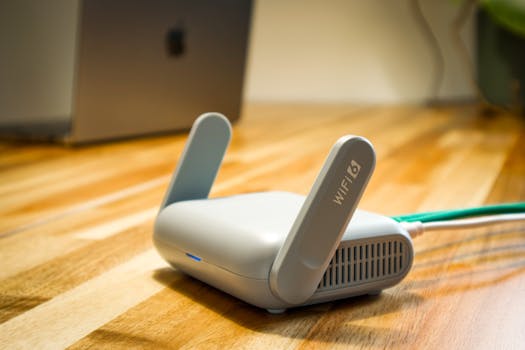
Like many, I assumed the common culprits: an outdated modem, a congested Wi-Fi channel, or perhaps some cosmic interference from my neighbor’s microwave. I bought a brand-new, top-of-the-line router, thinking its shiny antennas and next-gen Wi-Fi 6 capabilities would surely break the spell. They didn’t. The speed stayed stagnant, a bitter pill to swallow after shelling out a good chunk of change.
My frustration was boiling over. I was on the verge of switching ISPs, convinced that my current provider was simply incapable of delivering on their promises. But something nagged at me. What if, just *what if*, the problem wasn't external, but internal? What if I had overlooked something incredibly basic, right under my nose, within my own home network?
A Casual Chat, A Game-Changing Clue
The breakthrough came from an unexpected conversation with a friend, a bona fide tech wizard who builds custom gaming PCs in his spare time. I was venting about my internet woes, recounting every failed attempt and every wasted dollar. He listened patiently, then, with a knowing grin, he asked, "Have you checked your router's QoS settings?"
QoS? Quality of Service? I’d heard the term tossed around in tech forums, but always dismissed it as something only hardcore network engineers needed to mess with. My friend explained that many routers, especially newer ones, come with default QoS settings designed to prioritize certain types of traffic, like gaming or streaming, to enhance that specific experience. However, these settings can sometimes be overly aggressive, inadvertently choking off the *overall* bandwidth for everything else. It was a lightbulb moment. Could this be it? Could this be the one simple router setting?
The Unsung Hero: Unmasking the Culprit Setting
My router, a relatively recent model, indeed had a QoS setting, buried deep within its web interface. It wasn’t prominently displayed or easy to find; you really had to dig for it. The default configuration, it turned out, had a preset profile called "Smart QoS" or "Bandwidth Control," which was designed to "optimize" performance. In my case, this "optimization" was effectively strangling my connection, artificially capping it at around 10-15 Mbps regardless of my actual plan.
It felt like discovering a secret trapdoor that had been hidden in plain sight all along. The very feature meant to improve my internet experience was, in fact, the chief architect of my digital misery. The irony wasn’t lost on me. It was a classic case of an automated setting doing more harm than good, and I had been blissfully unaware for years.
Delving into the Router's Brain
Accessing your router’s settings typically involves typing its IP address (often something like 192.168.1.1 or 192.168.0.1) into your web browser. From there, you log in with your credentials (which are hopefully not still the default "admin/admin"). Once inside, the exact path varies wildly between manufacturers, but you’re usually looking for sections like:
- Advanced Settings
- Network Control
- QoS (Quality of Service)
- Traffic Manager
- Bandwidth Control
Mine was under "Advanced Settings" and then a sub-menu labeled "QoS." The option that was causing all my grief was a simple toggle switch or a dropdown menu for "Bandwidth Control" or "Smart QoS." It was set to an "on" position with a very low maximum bandwidth specified, perhaps a relic from a previous configuration or a factory default that was far too conservative.
Your Blueprint for Speed: How to Replicate My Success
If you’re experiencing similar inexplicable speed issues, here’s a simplified, step-by-step guide to investigate your own router settings. Remember, router interfaces vary wildly, so these are general directions.
- Access Your Router's Web Interface: Open a web browser (like Chrome or Firefox) and type your router's IP address into the address bar. Common IPs are
192.168.1.1, 192.168.0.1, or 10.0.0.1. You can usually find your router's IP by checking your computer's network settings (e.g., in Windows, open Command Prompt and type ipconfig; look for "Default Gateway").
- Log In: Enter your router's username and password. If you haven't changed them, try common defaults like "admin/admin," "admin/password," or check the sticker on your router. Change them immediately if they are default for security reasons!
- Navigate to Advanced Settings: Once logged in, look for sections like "Advanced," "Advanced Settings," "Administration," or "Network."
- Locate QoS or Bandwidth Control: Within the advanced settings, search for options related to "Quality of Service" (QoS), "Bandwidth Control," "Traffic Manager," "Prioritization," or "Medial Prioritization."
- Review and Disable/Adjust Settings: Examine these settings carefully. Look for any active bandwidth limits, speed caps, or "smart" QoS features that might be enabled.
- If you find an option to "Disable QoS" or "Disable Bandwidth Control," try turning it off.
- If it requires specific values, ensure they match or exceed your actual internet plan speed (e.g., if you have a 500 Mbps plan, ensure the router isn't set to cap at 10 Mbps). Often, setting these values to "0" or "unlimited" effectively disables the cap.
- Save your changes.
- Reboot Your Router: After saving changes, it's always a good practice to power cycle your router (unplug it for 10-15 seconds, then plug it back in) to ensure the new settings take full effect.
- Run a Speed Test: Head over to a reputable speed test site (like Speedtest.net or Fast.com) and test your connection again.
The Grand Reveal: A Night-and-Day Difference
The moment of truth arrived after I disabled the "Smart QoS" feature and rebooted my router. With bated breath, I navigated to Speedtest.net. The needle on the virtual speedometer started to climb, higher and higher, far beyond anything I had seen in years. It zipped past 50, then 100, then 200, finally settling comfortably above 480 Mbps, sometimes even hitting the full 500 Mbps I was promised. My jaw literally dropped.
It was a transformative experience. Overnight, my internet went from a frustrating crawl to an exhilarating sprint. Downloads that once took hours finished in minutes. 4K streaming was pristine, buffering a distant memory. Online gaming was smooth as silk. The difference was, quite frankly, night and day. And the best part? I didn't pay an extra dime for a new plan or new hardware. This was my existing plan, finally unleashed.
Peeling Back the Layers: Why Did This Work?
Modern routers are complex beasts. Many manufacturers include features like QoS to help manage network traffic, especially in homes with multiple devices doing different things (streaming, gaming, video calls). The idea is to prioritize time-sensitive applications to prevent lag. However, if these settings are poorly configured, or if the default assumes a much lower internet speed than you actually have, they can act as an unintended throttle.
My router's default "Smart QoS" had a hardcoded bandwidth limit that was far below my actual subscribed speed. It was designed to ensure "fairness" or "stability" for various applications, but in doing so, it simply wasn't letting my connection stretch its legs. By disabling it, I essentially told my router to get out of the way and let the full bandwidth from my ISP flow freely.
A Few Words to the Wise: Your Mileage May Vary
While this single router setting was my silver bullet, it's important to remember that every network setup is unique. Your specific router model might have a different menu structure, or your problem might stem from another issue entirely (like an old modem, poor Wi-Fi signal, or an actual ISP issue). This isn't a guaranteed fix for everyone, but it's a critical troubleshooting step that's often overlooked.
Before you buy new hardware or spend hours on the phone with customer support, take a deep dive into your router's settings. You might be surprised to find that the solution to your slow internet woes is a lot simpler, and cheaper, than you ever imagined.
Don't Settle for Slow: Take Control of Your Internet
My journey from 10 Mbps to 500 Mbps was a powerful lesson in never assuming the obvious. It taught me that sometimes, the most profound changes come from the simplest adjustments. If your internet speed feels inexplicably slow despite paying for a fast plan, don't just suffer in silence. Roll up your sleeves, log into your router, and see if a hidden setting is holding you back. You might just unlock a world of speed you never knew you already had. Go ahead, give it a shot – you’ve got nothing to lose but your buffering woes!